Baby Skincare: Essential Tips, Products, and Daily Care for Babies and Toddlers
Many parents are unsure about their baby’s skincare: How often should they bathe? Is moisturizing really necessary, or can you overdo it? Which products are useful—and which aren’t? What makes babies’ and toddlers’ skin so special, what kind of skincare does it need every day, and when should you seek medical advice?
Baby and Children’s Skin: Why It Is Particularly Sensitive
A baby’s skin differs significantly from an adult’s. It is thinner, has a looser structure, and loses moisture more quickly. At the same time, the skin’s natural barrier function is not yet fully developed. It lacks protective skin lipids, the lipid film is weak, and harmful substances can penetrate more easily.
This means that babies’ skin is less able to retain moisture and reacts more sensitively to external stimuli such as friction, microorganisms, cold, or heat. Dry skin can occur in babies, even when they do not have an underlying skin condition. This is not a sign of improper care, but rather a normal part of the skin’s maturation process. During the first few years of life, the skin gradually learns to better retain moisture and protect itself against external influences. Therefore, baby skin reacts more quickly with dryness or redness, even if it is otherwise healthy. The goal of skincare for babies is not to accelerate this maturation process but to gently support the skin until its protective function has become more stable.
Very Delicate: The Skin of Newborns
After birth, the skin has to adapt to a new environment. It is particularly thin, loses moisture quickly, and the skin barrier is still immature. The protective lipid film develops only gradually. In the first four weeks after birth, temporary skin changes are common, such as dry or flaky skin, redness, neonatal acne, or milia (small, white bumps, also called milk spots). These changes are usually harmless and disappear on their own.
Especially in the first few weeks of life, parents are often worried when their newborn’s skin changes almost daily. These adaptation reactions of the baby’s skin are often harmless and don’t require intensive care. Usually, it’s enough to gently cleanse the skin with water and apply a very small amount of cream. Only if skin changes are pronounced, weeping, or inflamed should medical advice be sought.
Still Sensitive: Babies’ Skin
After the first four weeks, the skin barrier continues to develop, but the skin remains very sensitive throughout the first year of life. Dry skin is common in babies, and redness, rough patches, or temporary itching can also develop—usually as a reaction to care products, saliva, sweating, cold, or friction from clothing. Skin changes such as cradle cap or diaper rash are not uncommon.
Furthermore, as babies grow older, they become more actively aware of their surroundings, and their skin comes into contact with new stimuli more frequently. Saliva during teething, first solid foods, or friction from clothing due to increased movement can irritate the skin. If the skin is occasionally red or dry, the triggering stimuli should be minimized. It’s also important to be gentle with your baby’s skincare. This means using skincare products sparingly and introducing new products gradually. If redness or rough patches appear after applying cream or washing, the product may not suit sensitive baby skin.
Already More Stable: The Skin of Toddlers
Young children aged one to five generally have more mature skin than babies, but it is not yet as resilient as adult skin. Increased activity, contact with dirt or food residue, and changing weather conditions often put more strain on children’s skin than on that of babies.
Hygiene habits, such as handwashing before meals or after using the toilet, now play a more significant role in the daily lives of toddlers. This can dry out the skin, especially if the soap used contains harsh cleansing agents or additives. Therefore, proper skincare for toddlers involves regularly and gently cleansing the skin with mild cleansers and specifically caring for stressed areas, such as hands and face, with a mild, moisturizing cream.
Healthy Skin in Children: How to Gently Care for It in Everyday Life
For babies and toddlers with normal skin, less is more. Many parents worry about harming their baby’s skin by using only a few or infrequent skincare products. However, it is precisely this restraint that helps the skin develop its natural protective function. Washing or applying creams too often, especially with unsuitable products, can actually weaken the skin barrier. A good indicator is the child’s own skin: if it feels soft and shows no redness, additional care is usually unnecessary.
Skin Care for Babies and Toddlers: Washing and Bathing
For daily cleansing of healthy baby skin, clear, lukewarm water is usually sufficient. Traditional soaps are unsuitable because they can disrupt the skin’s natural protective barrier. This mantle is slightly acidic and inhibits the growth of harmful germs.
Many babies and toddlers enjoy the contact with warm water during bath time. A daily bath isn’t necessary. Two to three baths a week are a good guideline for most children. On the other days, it’s sufficient to clean the face, hands, and diaper area. It’s important not to rub the skin dry after bathing but to pat it gently, as rubbing can damage the skin barrier. This helps retain more moisture in the skin.
Instead of soap, mild, soap-free cleansing agents (syndets) that are pH-balanced for the skin are suitable. Care products containing harsh surfactants such as sodium lauryl sulfate should be avoided.
Skin Care for Babies and Toddlers: Applying Cream
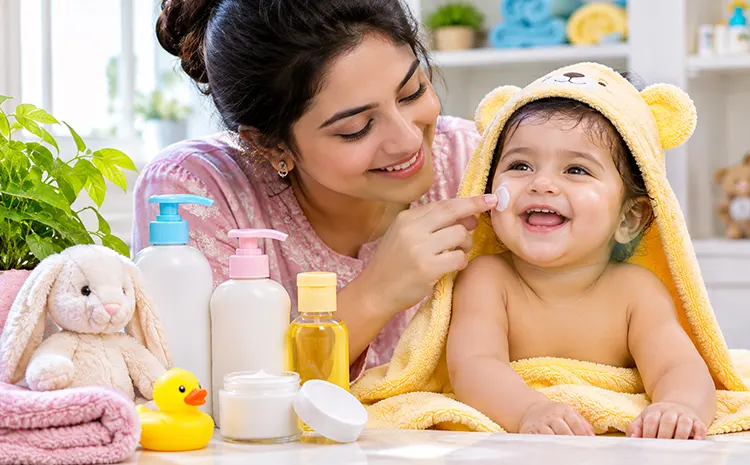
How often should baby skin be moisturized with cream? Parents can primarily base their decision on the condition of the skin. If the baby’s skin feels soft, it doesn’t need to be moisturized daily; this also applies to toddlers. Moisturizing is generally advisable for dry skin, after bathing, or in cold weather.
The following generally applies:
- Moisturizer is generally needed when the skin is dry or requires additional care.
- Whether daily moisturizing is even more beneficial is still debated by experts, but regular use of suitable moisturizers can help maintain the skin barrier and reduce dryness. Children with a family history of atopic dermatitis may benefit from appropriate basic skincare.
Applying cream can be particularly helpful after bathing or in cold, dry air to replenish the skin’s moisture. Apply a thin layer of moisturizer. If the skin becomes very shiny or feels greasy for a long time, too much cream has probably been used. Ideally, the skin should feel soft and comfortable after applying cream—not greasy or sticky. Avoid applying excessive amounts of cream, particularly in hot weather.
Even toddlers don’t usually need daily moisturizing. If the skin on the hands, face, or genital area appears dry or irritated, a nourishing cream can help soothe it.
Baby Care Products: Which Ingredients Can Be Problematic?
When it comes to baby care products, the rule is they should contain as few well-tolerated ingredients as possible. A look at the ingredient list can make the selection easier for parents: products with simple formulations and well-tolerated ingredients can be a suitable choice for sensitive baby skin. Furthermore, certain ingredients should be avoided whenever possible. These include, among others:
- Fragrances and essential oils
- Aggressive surfactants (for example, sodium lauryl sulfate)
- Preservatives that may cause irritation or an allergic reaction in sensitive individuals
Good options are plant-based lipid-based products, such as those containing sunflower oil or shea butter. However, cooking oils like olive oil are not suitable for regular children’s skincare, as they can impair the skin barrier.
Important: Product descriptions such as “suitable for sensitive skin,” “sensitive,” or “dermatologically tested” may indicate good tolerability, but the products may still cause individual reactions. If redness or itching occurs after use, the product should be changed.
Also Read: Face Serum: What It Is, What It Is For And How To Use It
Baby Skincare: What’s Important All Year Round
Whether spring, summer, autumn, or winter: seasonal changes noticeably affect the skin of babies and toddlers. Temperature, humidity, and sun exposure place different demands on baby skin. Adapting skincare to these external conditions helps keep skin healthy and avoid typical problems such as dryness or redness.
Baby and Children’s Skin in Sun and Heat
Babies and toddlers cannot regulate their body temperature as well as adults. In hot weather and when sweating, loose-fitting clothing made of natural materials can help keep their skin dry. Adequate hydration is also important to maintain the body’s overall moisture balance.
Baby skin is particularly sensitive to UV radiation. Direct sunlight should therefore be avoided. The best protection—for both babies and toddlers—is shade, loose-fitting clothing, and a hat. Sunscreen should generally be avoided in babies younger than six months. Shade and protective clothing are the preferred methods of sun protection. For babies six months and older, use a broad-spectrum sunscreen with SPF 30 or higher, following the product instructions. It is also important to choose products that are as gentle as possible, without fragrance or alcohol, and to consider mineral sunscreens containing zinc oxide or titanium dioxide, as they are generally less likely to irritate sensitive skin.
Also Read: How To Choose A Sunscreen
Baby and Children’s Skin in Cold Weather, Wind, and Dry Indoor Air
Cold weather, wind, and dry indoor air deplete the skin of moisture. Richer creams are therefore recommended during the winter months. Areas of skin such as the face and hands, which are particularly exposed to the cold air, should be given extra protection.
Care for Babies with Skin Problems: When Medical Advice Is Advisable
Changes in a baby’s skin can worry many parents, as they often appear suddenly and can look different. It’s not always immediately clear whether it’s a harmless adaptation reaction or a skin change requiring treatment. Generally speaking, many skin changes in infancy are harmless and temporary.
Possible situations in which support should be sought from a pediatrician include:
- Redness becomes more severe or the affected area starts to ooze.
- Crusts, open sores, or painful areas may form.
- Seek medical advice if skin changes are accompanied by fever or if the child appears unusually unwell.
- Despite adjusted skincare, the skin condition does not improve.
Frequently Asked Questions About Skincare for Babies and Toddlers
1. Why Is Baby Skin Particularly Sensitive and Different from Adult Skin?
A baby’s skin is thinner and less structured than an adult’s. Its natural protective barrier is not yet fully developed, which means it retains moisture less effectively. Harmful substances can penetrate more easily, while important skin lipids and the protective lipid film are only weakly present. Therefore, baby skin reacts more sensitively to environmental factors such as temperature fluctuations, friction, or microorganisms. Dry skin can occur in babies, even when they do not have an underlying skin condition—a normal part of the skin’s maturation process.
2. What Ingredients Should I Avoid in Baby Skincare Products?
It is best to avoid fragrances and essential oils, harsh cleansing agents such as sodium lauryl sulfate, and preservatives that may cause irritation or an allergic reaction in sensitive individuals. Traditional soaps are also unsuitable, as they can disrupt the skin’s natural protective barrier. Cooking oils like olive oil should not be used regularly, as they can impair the skin barrier. Products based on plant lipids, such as those containing sunflower oil or shea butter, are a better choice.
3. Which Care Products Are Truly Necessary for Daily Baby Skincare?
Very few products are needed for the everyday care of healthy infant skin. Lukewarm water is usually perfectly sufficient for daily cleansing. Mild, soap-free cleansers (syndets) with a skin-friendly pH can be used if necessary. A simple, well-tolerated moisturizing cream for occasional application and perhaps some baby wipes for when you’re out and about are all that’s required. When it comes to infant skincare, less really is more.
4. How Can I Effectively Protect Baby Skin from Sun Exposure?
Protect babies from direct sunlight by keeping them in the shade and dressing them in protective clothing, including a wide-brimmed hat. Babies younger than six months should generally not use sunscreen. For babies six months and older, apply a broad-spectrum sunscreen with SPF 30 or higher to exposed skin and reapply it according to the product instructions.