Tooth Structure: What Are Teeth Made Of and How Can You Protect Them?
What Types of Teeth Are There and What Functions Do They Have?
Humans develop 20 primary teeth and typically have 32 permanent teeth, including wisdom teeth. First, the 20 primary teeth erupt, followed later by up to 32 permanent teeth. They form the so-called permanent dentition and are the lifelong tools for biting and chewing.
A look inside the mouth reveals an astonishing variety of shapes: narrow, sharp incisors at the front for biting, next to them pointed canines for tearing, and at the back, the molars for grinding and crushing food. But however different they may look, all teeth are built according to the same principle, both externally and internally. This unique design enables our teeth to withstand enormous forces during chewing. Biting forces can reach several hundred Newtons, depending on the individual and the location of the bite.
Tooth Structure and Composition: 3 Key Questions and Answers
1. What Is the Structure of a Tooth?
Each tooth has a crown, a neck, and a root. The crown protrudes visibly from the gum. The neck connects the crown to the root, which is anchored deep in the jaw.
2. What Is a Tooth Made Of?
Inside a tooth is the pulp, containing nerves and blood vessels. The pulp is covered by dentin. Enamel protects the dentin in the crown area, while cementum protects the root area.
3. How Does a Tooth Stay in the Jaw?
The tooth sits with its root in a socket in the jaw (alveolus) and is elastically connected to the jawbone via the periodontal ligament. The gums seal the neck of the tooth.
Our teeth perform amazing feats: with every bite, they are subjected to enormous forces—and yet they usually remain undamaged. What exactly makes teeth so hard and resilient? Why can they withstand so much? A look inside reveals an ingenious system of layers that skillfully combines stability and flexibility.
What Is the Structure of a Tooth?
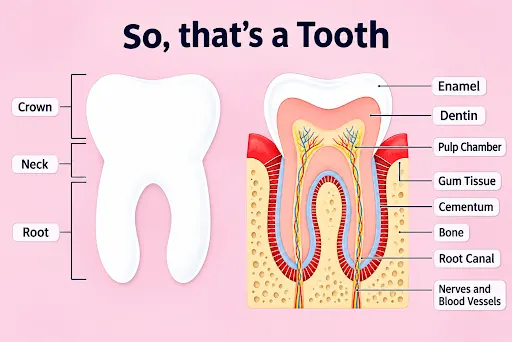
The external structure of teeth isn’t all that complicated. But when you look at a tooth in your mouth, you’re only seeing a small part of this tiny organ. The visible part above the gum line is just the tip of an astonishingly complex structure. Every tooth, whether incisor, canine, or molar, consists of a crown, a neck, and a root.
Crown of the Tooth (Corona Dentis)
The crown is the visible part that we show when we smile, feel with our tongue, and brush daily. It protrudes from the gums and comes into direct contact with food.
Tooth Neck (Cervix Dentis)
This is the narrow transition zone between the crown and root of the tooth. The tooth neck is particularly sensitive because this area is where the protective outer layer of the tooth crown, the enamel, ends. Therefore, the tooth neck is usually covered by gums. It can become exposed when the gums recede, including as a result of gum disease or other factors. The tooth neck can become exposed when the gums recede, particularly in cases involving gum disease and tooth loosening. Maintaining healthy gums is important for protecting the sensitive areas around the tooth.
Tooth Root (Radix Dentis)
The root is the lower part of the tooth and is anchored in a bony socket of the upper or lower jaw, the so-called dental alveolus. Tiny openings at the root tip allow fine blood vessels and nerves to enter the tooth. They supply it with nutrients and keep it alive.
Are Teeth Bones—and What Exactly Are They Made Of?
Teeth are not bones. Although both teeth and bones belong to the so-called mineralized tissues of the body and contain similar components, they differ fundamentally in their structure, development, and function.
But what are teeth made of, and what exactly is their structure? Teeth consist of a complex system of hard and soft layers. Working together, these layers make the tooth strong enough to grind grains and nuts, while also being sensitive enough to perceive the slightest temperature changes.
Dentin
Dentin forms the main mass of the tooth crown, neck, and root. It consists of approximately 70% mineral, 20% organic material, and 10% water by weight. This structure gives dentin its strength but also the necessary elasticity to withstand chewing pressure without fracturing. Specialized cells called odontoblasts, located inside the tooth, continuously produce new dentin. Odontoblasts possess fine, elongated cell processes that extend through tiny tubules throughout the dentin. An important function of these cell processes is to transmit stimuli, such as those related to cold or heat.
Tooth Enamel (Enamelum)
At the crown of the tooth, the dentin is covered by enamel. This forms the outermost, shiny layer that gives our teeth their bright white appearance. It is the hardest material in the human body. Tooth enamel is harder than bone and even harder than steel. This is because enamel consists mainly of densely packed hydroxyapatite crystals, which give it its exceptional hardness. The enamel serves to protect the more sensitive dentin from heat, cold, acids, and mechanical pressure. Unlike the dentin, however, enamel contains no cells. Therefore, it cannot regenerate. Once damaged, for example by cavities or acid, the body cannot repair it.
Dental Cement (Cementum)
Dental cementum is a specialized mineralized tissue that covers the tooth root. Dental cementum covers the tooth root and provides attachment for the periodontal ligament, which connects the tooth to the jawbone.
Dental Pulp
Inside the tooth lies the dental pulp. It consists of blood vessels, lymphatic vessels, and nerve fibers. The dental pulp supplies the tooth with oxygen and nutrients and makes it sensitive to pain. The pulp is essential for the tooth’s immune function. As long as it remains intact, the tooth is vital. If the dental pulp dies, for example, due to an inflammation that is not treated in time, only the hard outer shell of the tooth remains: functional, but without any internal life.
How Are the Teeth Attached to the Jaw?
For a tooth to withstand the enormous forces of chewing, it must be firmly anchored in the jaw—while simultaneously being able to move a tiny bit to absorb these forces. The periodontal ligament, among other things, maintains this balance between stability and flexibility. The periodontium consists of the periodontal ligament, alveolar bone, gums, and cementum. The cementum can therefore be considered part of both the tooth and the periodontal ligament.
Each tooth root, that is, the part of the tooth below the gum line, sits in a socket, called a tooth socket (alveolus), in the upper or lower jaw. This section of the jaw is called alveolar bone.
However, the tooth isn’t fixed in place like a nail in wood. Between the tooth root and the jawbone is a thin layer called the periodontal ligament. This connects the protective cementum to the bone in an elastic way. This connection allows the tooth to move slightly with each bite, cushioning the chewing forces and protecting both the tooth and the jawbone.
The gums cover the upper edge of the tooth sockets and the jawbone. They fit snugly against the neck of the tooth. In this way, the gums protect against bacteria and stabilize the connection between the tooth and jaw.
How Can Teeth Be Best Protected and Preserved?
However resilient teeth may be, once damaged, they can hardly heal. Tooth enamel cannot regenerate once it has formed, and receding gums do not grow back. Preventing inflammation and cavities is therefore crucial to preserving the natural structure of the teeth.
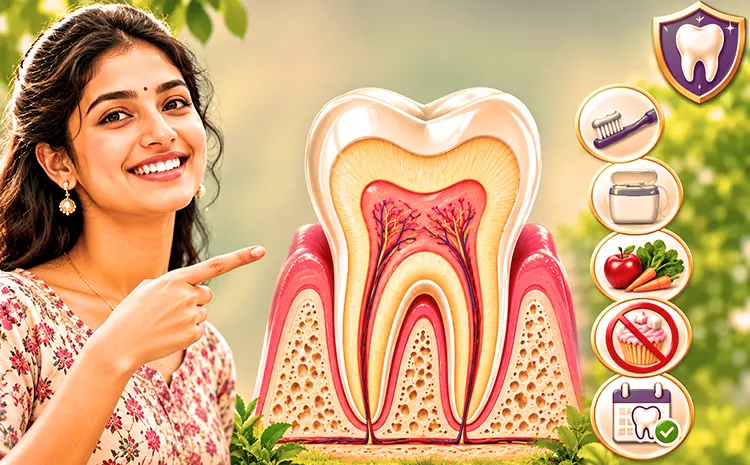
These simple habits can help protect teeth in the long term :
- Fluoride helps remineralize tooth enamel and makes it more resistant to acid attacks. This process is called remineralization. This makes the surface harder and more resistant to acids that come into contact with the tooth during eating or from bacteria.
- A low-sugar diet offers additional protection. Sugars provide food for bacteria in dental plaque, which produce acids that contribute to tooth decay. Avoiding soft drinks and fruit juices also helps: they further attack tooth enamel with acids.
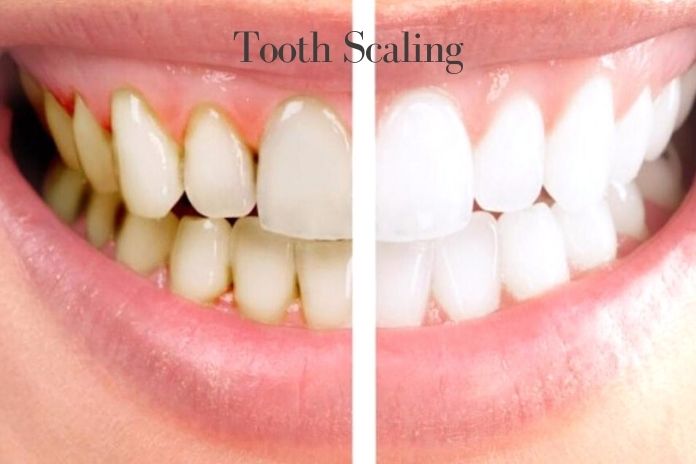
- Regular dental care is equally important. It is recommended to gently brush your teeth at least twice a day for at least two minutes. This removes plaque before it hardens into tartar. Regular brushing and cleaning between your teeth help prevent plaque buildup. However, once plaque hardens into tartar, professional tooth scaling is needed to remove these deposits and support healthy teeth and gums.
This keeps teeth strong and preserves the foundation of a healthy smile. Teeth are true masterpieces of nature: hard as stone yet alive, precisely constructed, and finely tuned. Every layer—from the gleaming crown to the deep root—fulfills its own function and contributes to the tooth’s overall function.
Whether cutting, chewing, or smiling, many everyday activities are impossible without teeth. It’s all the more surprising, then, that teeth often only receive attention when they hurt. Understanding the complex structure of a tooth allows us to appreciate our teeth as lifelong companions and not just as tools.
Frequently Asked Questions About Tooth Structure
What Are the Main Components of a Tooth?
A tooth consists of three parts: the crown, the neck, and the root. The crown is the visible upper part that protrudes from the gum. The neck forms the transition zone between the crown and the root. The root anchors the tooth firmly in the jawbone.
What Is the Function of Tooth Enamel?
Enamel forms the outermost layer of the tooth crown and is the hardest material in the human body. It protects the underlying, more sensitive dentin from external influences such as temperature fluctuations, acids, and mechanical pressure. Since it contains no cells, it cannot regenerate itself when damaged. Tooth enamel owes its exceptional hardness to the mineral crystals from which it is primarily composed.
What Is the Function of Dentin?
Dentin makes up the majority of tooth structure and extends through the crown, neck, and root. It combines strength with elasticity, allowing it to absorb the forces generated during chewing without breaking the tooth. Fine channels in the dentin transmit stimuli such as heat or cold. Specialized cells continuously produce new dentin.
What Role Does the Tooth Root Play?
The root forms the lower, unseen part of the tooth and anchors it in the jawbone. Tiny openings at its tip allow nerves and blood vessels to enter the tooth’s interior, supplying it with vital nutrients. Thanks to its robust structure, the root can withstand the enormous chewing forces exerted during eating.
How Can I Best Protect My Teeth?
Fluoride toothpaste strengthens tooth enamel by incorporating minerals, making it more resistant to acids. A low-sugar diet deprives cavity-causing bacteria of their food source. Brushing your teeth gently for at least two minutes twice a day removes harmful plaque. Avoiding acidic drinks like soft drinks further protects tooth enamel. Regular dental checkups help detect damage early.